The latch on the prison door

Standard

Sermon for Good Friday 2026

Readings:

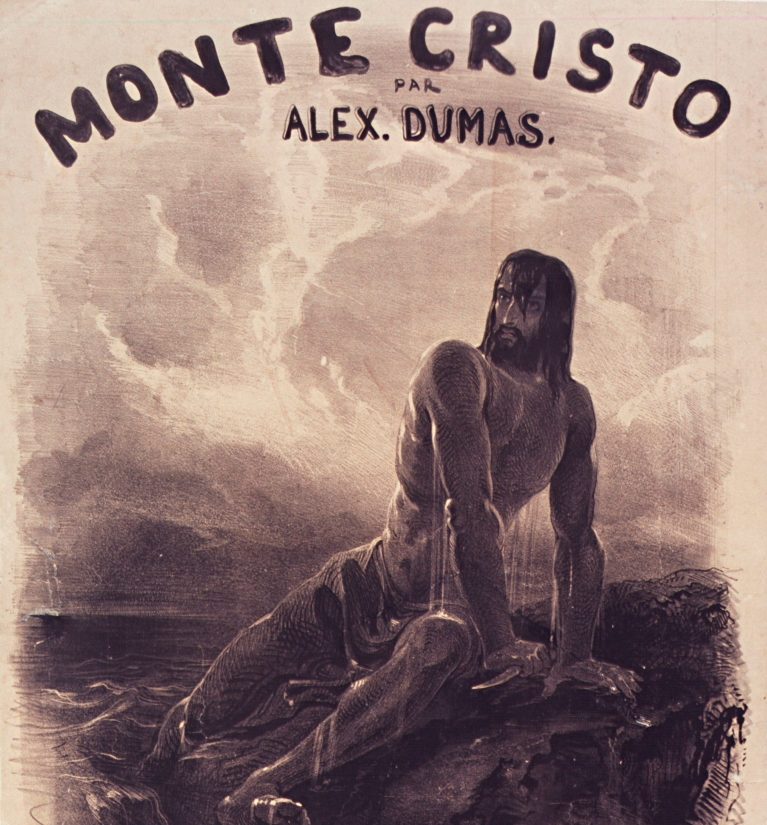
Before we talk about the passion of our Lord this afternoon, I want to talk about another more recent, and quite different story of death and new life. The Count of Monte Cristo by Alexandre Dumas. If you haven’t read it, it is quite a story. A bit long, but very compelling. If you don’t feel up to the challenge of reading it, there is a very good adaptation right now on Masterpiece Theater on PBS that I would recommend. But here for my purposes today is a very short synopsis of how the story begins. 

Edmund Dantes is a sailor that has just returned to his home port of Marseille and hopes finally to marry his beautiful fiancé. He is a decent, upright guy, but a number of evil actors around him conspire to frame him for espionage and have him thrown in prison. The prison is the notorious Chateau d’If, which is a real place out in Marseille harbour, sort of like an Alcatraz. Not a place you would want to go and not a prison you could easily escape from. Year after year after year he is there, imprisoned in a dark dungeon. He is treated cruelly; he loses hope and wants to die. Until one day he notices a tapping or a scratching coming from the wall. Then he hears a voice of another prisoner. Eventually the prisoner tells him to stand back and he pushes some of the stones in the wall out of place and crawls into Edmund’s prison cell. This mysterious other prisoner, we discover is the Abbe Faria, an imprisoned old priest who has been trying for years to tunnel himself out. The Abbe encourages Edmund to follow him, keep working and digging and he assures him that they will eventually get to freedom. Naturally Edmund follows him, because this is his only hope, so they continue to dig together. But it isn’t easy and it isn’t simple. It takes years.

When they are not digging, the Abbe Faria tutors Edmund. We learn that the Abbe Faria is a gifted teacher who has memorized volumes of books, on so many different subjects. He spends countless hours teaching Edmund everything he knows: theology, physics, languages. This education is such a gift to Edmund. It expands his mind and gives him hope for what he might do someday when he is free, but he is still imprisoned. The education is worthwhile; it is making Edmund stronger, but he is still a prisoner. No amount of Latin is going to tear down that prison wall. 

And then one night the Abbe Faria dies. Edmund can hear the prison guards cover up the old priest and sew him into a shroud. Then they say they will come back and get the body later. Edmund realizes that this is his chance. He manages to switch places with the body of his dead friend. He sews himself up into the shroud, and when the prison guards come, it is Edmund that is taken out and thrown into the sea. Then he breaks out of the shroud, swims to shore, and begins a new life. It’s a great story, and that is just the beginning of it. You will have to do your own research to find out how it all ends, if you don’t already know. It is, I hasten to add, a very different story from the passion of our Lord. The new life that Edmund lives after his escape is very different from the new life that Christ promises us. But I couldn’t help but notice some similarities to the story we tell today, here on this Good Friday. There are, in that story, symbols of our Lord’s passion. It is a story of death and new life.

It was the old priest’s death that sets Edmund free. That was what opened the door. Literally. Edmund spent 15 years trying to dig his way out, but the tunnel never really got him anywhere. The education and the teaching of the Abbe were wonderful and of immense value to Edmund, but they didn’t set him free either. I imagine it is sort of like the gyms and the libraries in prisons today. The self-help and the self-improvement is good for you, but it doesn’t make you free. After years of digging, Edmund is much more educated, but he is still a prisoner. It was a death that freed Edmund. The Abbe Faria died and his death gave Edmund new life. If the old priest had just been a teacher, then his death would have been in no way good for Edmund. But the priest was more than a teacher, he was a savior.

That’s the part about Christianity that many people just don’t get, especially non-Christians. It’s why our observance today is hard for even many Christians to understand. If you think of Jesus only as a teacher, a philosopher, or a moralist, then his death could in no way be called good. We may take inspiration from how he responded to the circumstances around his death, but his death itself would be bad. But from the very beginning of the church, that is not how Christians have seen the death of Jesus. Because, for us, Jesus is not just a teacher. He is a savior. His death is something that we remember and lament, but we have always held that it actually accomplished something. Something which for us is very good. It was the moment when the latch on the prison door clicked open. 

From almost the beginning of creation humans have been enslaved by sin and death. The evidence is all around us. There are evil forces in this world which wish to do us harm, but then there is also the person in the mirror, who is often our own worst enemy. We are imprisoned, not by God, but by our own sinfulness. We were created by a loving God to be better than we are, but we turned away. We turned God’s good earth into a world of empires that hold onto power through the terror of death. That’s what the cross was: an instrument of an empire. A means of control. 

But the events surrounding Jesus’s death convinced his followers that this was not just a death like any other. They had seen many crucifixions before, but this one was different. Something was different. Something was happening that they couldn’t quite comprehend. There were signs and earthquakes and darkness, and weird things happening like the temple veil being torn in two. And then three days later the ultimate sign, the empty tomb and the risen Jesus. In some ways his death was like any death, but in some ways it was not. What was happening on that Good Friday? How was Jesus offering us freedom? Why was his death special?

Christians have tried to explain exactly what happened on the cross since the moment Jesus died. We fumble around to explain things that are beyond our understanding. But here is my feeble attempt to explain it this afternoon. The one creature that death has no power over or claims against is the author of life. Our God, our creator is not bound to death in any way. Our God does not have to die. Our God is free. But his children are enslaved. So God enters into the prison with us. He crawls mysteriously into our cell like the Abbe Faria. He takes on our humanity in the person of Jesus Christ, and then he suffers our death and in exchange offers us his life. The mechanics of all of this are one of the mysteries of our faith, but the conclusion that Christians throughout time have come to, is that Jesus in his death, accomplished something for us that we could not accomplish on our own. 

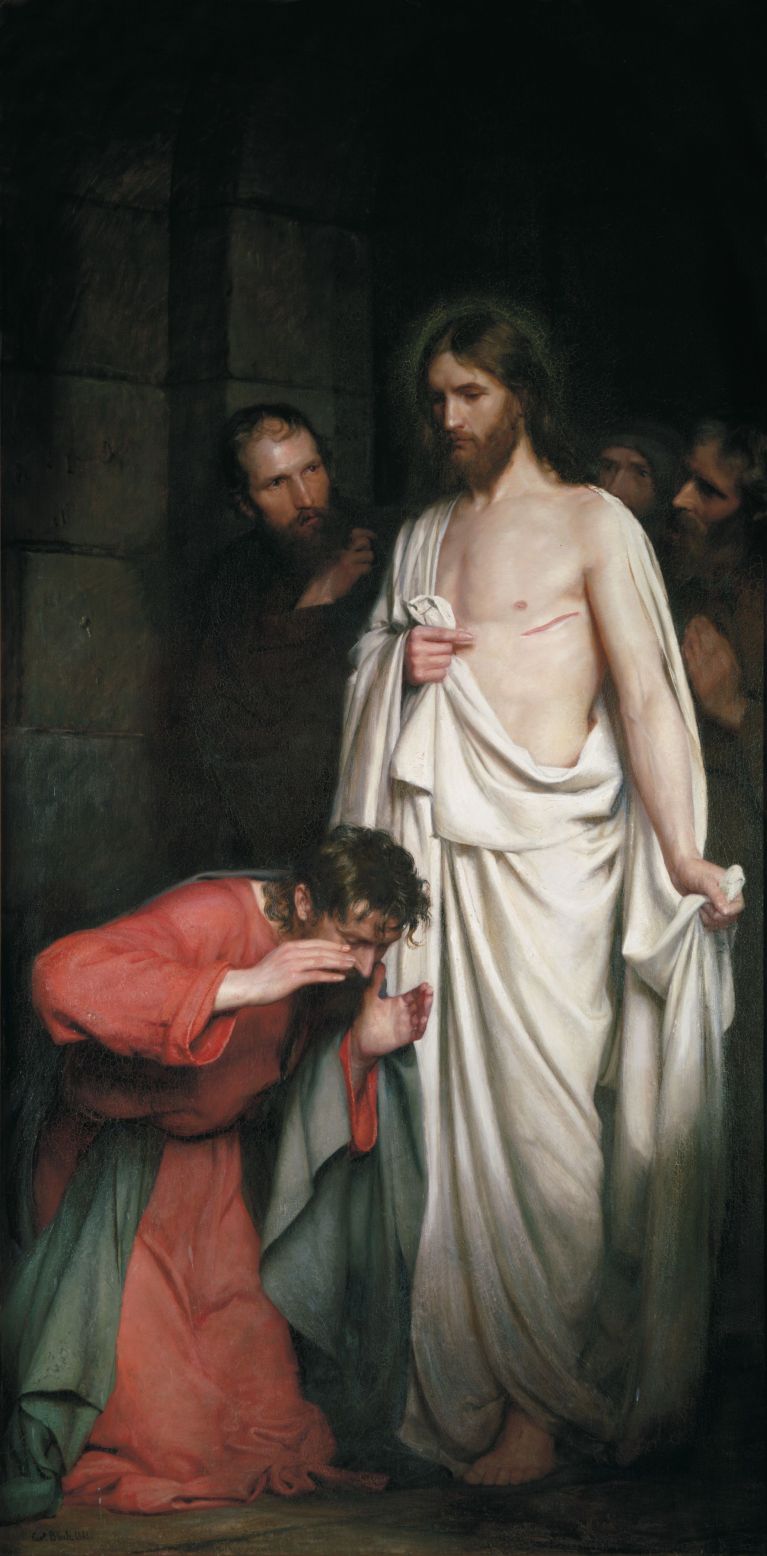
The emotions of Good Friday are complicated and it can be quite hard to perceive what is good about this day. But I want you for a moment to imagine Edmund Dantes, the Count of Monte Cristo, as he kneels next to the dead body of his friend and teacher the Abbe Faria. This was his teacher who has died, but through that death he now has the chance to really live again. The lessons the Abbe taught him were wonderful, but this was his greatest gift. The lessons that our Lord Jesus taught us, are of immeasurable value, but freedom and new life, that is his greatest gift. That is why today is good. 

Why are you here tonight?

Standard

Sermon for Maundy Thursday 2026

Readings:

Why are you here tonight?

I imagine that there are probably about as many reasons as there are people here.

Some of you are here because you are on the schedule to usher or read.

Some of you are here because you are in the choir and you sing.

Some of you are here because someone else made you come.

Some of you are paid to be here.

Some of you came because we were having dinner. 

Some of you are here because this is Holy Week and Maundy Thursday is a tradition.

Some of you are here because you love this church and want to support it. 

Some of you are here because someone you love is sick, or in need, and you want to pray for God to help them.

Some of you are here because the world is driving you mad and you don’t know where else to go. 

There are any number of reasons why you might be here tonight. 

I know that none of you came because you wanted to have your feet washed. Seriously, if I installed a couple massage chairs up here and charged you $60 there would be a line in here, but taking your shoes off in church, God forbid. People would rather help you plunge the toilets. It’s my annual struggle. You know, I thought I might ask Senator Corey Booker if he would be my guest preacher tonight and he could just preach until I got twelve volunteers to come forward. It might test his capabilities. 

Of course, I know I can’t take it too personally. Jesus got some resistance with foot washing too. Peter, the rock, even Peter tried to refuse to allow Jesus to wash his feet. Lord, are you going to wash my feet? You will never wash my feet! If your impulse is to recoil at the thought of someone publicly washing your feet (outside of a nail salon of course), then you are in good company. Peter found the idea completely objectionable as well. I get it. This is a slightly odd ritual. 

What I find fascinating though is that I think a major part of what makes all of this really uncomfortable is the setting. Church. If we were at the beach, many of you would think nothing of taking off your shoes and walking in the sand. The same would be true at a neighbor’s pool party. I alluded to it a moment ago, but there is a nail salon across the street; I imagine some of you would feel much better walking over there and paying someone to wash your feet. And yes, they will certainly do a better job than I will and they may throw on a bit of color at the end, so you will get much more for your money, but there isn’t that sense of embarrassment. So why is it so uncomfortable in church? 

I have thought a lot about this. I have had plenty of uncomfortable Maundy Thursdays to think about it. What I have come to is this: a lot of people come to church wanting to feel strong, useful, needed, important. It’s a formal setting and we want to look our best and at least appear to be upright and respectable. Isn’t it funny though, you can pay someone to care for your feet and it feels perfectly fine; perfectly respectable. But when someone does it for free, it becomes extremely awkward. There is something in the exchange of money that still gives you the power and the respect, but when it is done for free, as an act of charity (in the original sense of that word meaning self-giving love) then we don’t like it. That is when pride gets in the way. It isn’t really about the way your feet look, it is about wanting to feel strong and independent and in control. If someone is going to wash our feet, we had better be paying them to do it, lest someone look at us and think that we might actually need help.

Simon Peter, who was nicknamed the rock, was a strong person. That is why Jesus picked him. And he would go on to do amazing things for the Jesus and the Church. But he needed Jesus, more than Jesus needed him. He needed to be washed first, before he could go out and be any use to others. He didn’t want it. He tried to refuse. His pride put up a fight. But Jesus said “unless I wash you, you have no share with me.” Before Peter could be of any real service to Jesus, he had to let Jesus serve him. Peter needed to give up the illusion of being strong and clean and put together, for at least a few moments, and accept the love that was being offered to him by Jesus, with all of his filth and his flaws. Only once he had accepted Jesus’s act of love could he truly go out and be an effective agent of love for others. 

That’s the piece I think we miss sometimes. A lot of folks come to church wanting to be of service. They want to go out and do nice things for nice people and that can be a beautiful impulse; wanting to stand up for Jesus and show love and compassion to others. But the question I think we need to ask, and that this bizarre ritual that we do once a year forces us to examine: is where is our pride and where is our power? When we are showing love to others, are we always doing so from a position of power? Do we ever admit to our own vulnerability, or are we always just being strong for others? It’s great to want to go out and wash the feet of the poor and needy in the world, but have you been willing to let Jesus wash you? 

Like it or not, we will never truly share in Jesus’s ministry in this world unless we let him wash us first. We need to truly receive his love before we can effectively share it. So maybe you came here tonight with your own plans. Maybe you thought you were coming because Father Kevin needed help at the altar. Maybe you thought you were coming because Mark Weisenreder begged you to step in as eucharistic minister. Maybe you thought you were coming tonight because you like to run the fancy dishwasher in the kitchen and everyone loves those who help clean up. Maybe you thought that your prayers are needed to help someone you love. All of that may be true, and more. But what may also be true, is that God may have his own plans for why he dragged you here tonight. Jesus might want you here tonight, and it might not be because he needs you; it might very well be because you need him. Maybe you aren’t as strong or as put-together as you pretend to be. Maybe you need help. Maybe you need love. Maybe you are the one who needs to be washed. Maybe that is why you are here tonight.

These things you have done, and I kept still.

Standard

Sermon for Palm Sunday 2026

Readings:

The Liturgy of the Palms

The Liturgy of the Word

Then Pilate said to him, “Do you not hear how many accusations they make against you?” But he gave him no answer, not even to a single charge, so that the governor was greatly amazed.

We often think of the gospel readings that we hear during mass to be mostly the words and the teachings of Jesus. But in today’s quite long gospel account of the passion of our Lord, the actual words of Jesus are relatively few. Today’s gospel is not a sermon, it is not a parable or a story, it is not a moralistic teaching. Today’s gospel is not as much about words as it is about actions. And actions speak louder than words. Words, even when they are shouted may be shallow and meaningless. Today we recall that when Jesus entered Jerusalem on that Palm Sunday, the crowds shouted “Hosanna to the Son of David! Blessed is the one who comes in the name of the Lord!” Their praise of Jesus was shouted from the rooftops and in the streets, but what did all that shouting mean? Those loud shouts of praise would turn to loud shouts of condemnation in less than a week. Most of the people who shouted “Hosanna” would later shout “crucify.” What the crowd said, was not nearly as significant as what they did. They projected onto Jesus their hopes and dreams, but also their failures and their sins. They expected Jesus to only affirm and not to challenge, and when he did challenge them they eliminated him as quickly as possible.

Friends, let me pause here for a moment and emphasize that when I say “them” what I really mean is “us.” Jesus’s death was God’s response to human sinfulness. Human sinfulness. That’s all of us. Don’t try to get off the hook by blaming this on the Jews or the Romans, or the Clergy, or Politicians. One thing that the gospel makes pretty clear today is that just about everyone has a hand in his death. From the mighty Pilate to the servant-girl in the street, there is plenty of blame and guilt to go around. Humans are a fickle lot, so what we say in the gospel is not nearly as important as what we do. Remember that Pilate said “I am innocent of this man’s blood” just as he is handing him over to be crucified. Words can be pretty meaningless sometimes.

And standing in stark contrast to all of this human hypocrisy and lies and shifting public opinion is Jesus, who is often silent in today’s gospel. Perhaps more silent than we would like. As he enters Jerusalem, riding on the back of a ridiculous donkey, Jesus says very little. When he clears the temple of the money changers, he says little to defend himself, only quoting a line from the prophet Jeremiah. He performs miracles with no explanation. He is challenged by the chief priests and scribes and responds with a simple line of scripture. His words become fewer and fewer and Jesus nears the end of his life. And finally, as he is on trial before Pilate and being condemned for a lie, Jesus stands silent. He offers no words in his own defense. The Messiah, the Son of God, is silent and still. Sometimes God speaks, and sometimes God is silent. 

This week I have been thinking about Jesus standing silent before Pilate as the crowd called for crucifixion for him and freedom for Barabbas, and my mind kept being drawn to one of my favorite Psalms, Psalm 50. It comes around once a month if you say morning prayer daily, and it is one of those Psalms that always jumps out at me. If you want to, grab the prayer book in front of you and turn to page 654. Psalm 50. Jump ahead to verse 16.

16But to the wicked God says: *
    Why do you recite my statutes,
    and take my covenant upon your lips;
 
17Since you refuse discipline, *
    and toss my words behind your back?
 
18When you see a thief, you make him your friend, *
    and you cast in your lot with adulterers.
 
19You have loosed your lips for evil, *
    and harnessed your tongue to a lie.
 
20You are always speaking evil of your brother *
    and slandering your own mother’s son.
 
21These things you have done, and I kept still, *
    and you thought that I am like you.”
 
22“I have made my accusation; *
    I have put my case in order before your eyes.
 
23Consider this well, you who forget God, *
    lest I rend you and there be none to deliver you.
24Whoever offers me the sacrifice of thanksgiving
                            honors me; *
    but to those who keep in my way will I show
                            the salvation of God.”

These things you have done, and I kept still, and you thought that I am like you. That is such a powerful line. Sometimes God speaks, and sometimes God is silent. But do not equate God’s silence with approval. God can see past our loud shouts and protestations. God knows just how humans are. God knows just how much words mean to us. So honoring God with sacrifices and thanksgivings is one thing, but it is those who actually keep his ways, who understand the importance of action, that will see the salvation of God. 

God’s salvation can be seen in action, more than in words. That is the lesson of the Passion Gospel. That is the lesson of Holy Week. That is the lesson of Easter. Pay attention to what Jesus does. He cleanses the temple, and he cleanses his disciples’ feet. He offers his body in the bread of the last supper and on the cross of Good Friday. He is betrayed and he forgives. He dies by the power of humans. He rises again by the power of God. He is confronted with human sinfulness at its worst and unlike us, he doesn’t defend himself or justify himself with shouts or empty phrases. He is fully human, but in many ways he is NOT like us. He remains still and silent before his accusers, but his actions are a revelation of the faithfulness of God. From the shouts of Hosanna, to the shouts of crucify, God remains faithful to us, even when we have been faithless to him. That is the love of God. It has been revealed to us in Jesus’s words. But this week, perhaps more than any other, it is revealed to us most clearly in his actions.

The children of time

Standard

Sermon for February 15, 2026

Readings:

It can be very hard to talk about holy and mystical moments and experiences in life. Some things just touch us so deeply and personally that they defy explanation. To talk about them can feel sacrilegious and you can feel this even if you aren’t religious. The birth of a child, the death of a loved one, viewing a stunning natural wonder, or even having an incredible meal…these things can be experiences that are really hard to convey with words. We may also experience things that are so outside our understanding of the natural world that it may be embarrassing to talk about them. We don’t want people to think that we have totally lost our grip on reality. Our experience of the world is not always as simple as we would like it to be. Sometimes the most profound things are the most difficult to talk about. 

This morning our gospel reading was the story that we refer to as the Transfiguration. The disciples Peter and James and John had a mystical experience of Jesus on top of a mountain. They were some of his closest followers, and I am sure that they were hoping for some private one on one time with their teacher and leader. But what they got was so much more. They had an experience, an encounter. They saw Jesus transfigured. His image changed. There was a light that shone from him that they hadn’t seen before. To make it even more bizarre, they saw the figures of Moses and Elijah on either side of Jesus talking to him. God was trying to show them something. There was a deep connection between Jesus and Moses and Elijah. And then there was a voice from heaven: “this is my son the beloved, listen to him.” No doubt, these disciples had all been hoping that if they went up the mountain alone with Jesus that he would finally answer some of their more pressing questions, but that isn’t what happen. Sometimes we come to God looking for answers and we walk away with more questions, and that is certainly what happened to Peter and James and John. They experienced something that was really unbelievable, and at first it frightened them. 

I am sure that those three disciples were relieved when Jesus told them not to tell anyone what they just saw, because who would have believed them anyways? It wasn’t time yet. Some holy encounters you have to hold onto for a while. But we know that eventually Peter and James and John did share their experience of Jesus on the mountain. Peter alludes to it in his letter this morning, it was remembered by the other disciples and recorded in the gospels. Those three disciples shared their experience of Jesus on the mountain with the rest of the community after Jesus rose from the dead and everyone was stunned and wondering how to make sense of what just happened. After the Resurrection, the experience that Peter and James and John had in private would help to shape the church’s collective understanding of who Jesus was as the son of God and what his life and ministry was all about. Three individuals had a private encounter with God; their experience was their own; and yet all of us in the church are blessed by it. 

The Christian life is a funny thing. We come to God individually, but as a group. And if that sounds like an obvious contradiction it is because it is. Our faith is filled with such paradoxes. We are baptized one by one, as individuals, and yet we become a part of something larger than ourselves: the Church. Christ’s body. We have individual relationships with God, but we are undeniably shaped by the community around us. We are many and we are one at the same time. We each have the capacity to experience God individually, and yet our collective understanding of God, as the church, is never defined by the experience of one person. That is why Peter says in the epistle this morning that “no prophesy of scripture is a matter of one’s own interpretation, because no prophecy ever came by human will, but men and women moved by the holy spirit spoke from God.” The scriptures belong to all of us, collectively. They were written by human hands, but the message is from God and for all of us. So, in order to read them faithfully we need each other. No one human being has the final say on the interpretation of scripture. The final say will ultimately always belong to God, but until we meet God face to face, we will need each other. We need each other’s insights and wisdom. We need each other’s experiences. That is what has shaped our faith over the centuries.

There is a famous eighteenth-century French lawyer and philosopher names Jean Anthelme Brillat Savarin. He became especially famous as one of the world’s first food writers. He is known for saying “tell me what you eat, and I will tell you what you are.” I always thought that that was a line that Christians should ponder as they come forward for communion. Well, he wrote this book called the Physiology of Taste, and yes it is the sort of thing I read when I am on vacation because I am lots of fun. Anyways, in this book Brillat Savarin writes that “the sciences…are children of time and are formed insensibly by the collection of the methods pointed out by experience…” Sciences are the children of time. They are formed by the collection of experiences. Science is about learning from observation, over and over again, across time. Scientists learn from each other. They learn from each others’ experiences. They also learn from each others’ mistakes. But that deep communal knowledge is a process that takes time. So the sciences are the children of time.

But I could say the same thing about faith and religion. Or at least, our faith and our religion. Science and faith do not have to be adversaries. There are differences to be sure, but they are both children of time. They are both formed by the collection of experiences. They both learn from observation. They just observe different things. Our faith wasn’t formed by one person. It has been shaped by a hundred generations of people stretching back through time. Even Jesus, who we believe to be the son of God and the perfector of our faith, even he lived in conversation with those who came before him. That is what those disciples saw on the mountain when they saw Jesus speaking to Moses and Elijah. He was in continuity with the law and the prophets. He was their fulfillment. But he was part of a bigger story, just like they were part of a bigger story. Each individual has their own relationship with the creator, but they each also contribute in some way to our collective understanding of God. We each have a story to tell, but we are each a part of a much bigger story. Christianity is not, as Peter says in his epistle, “some cleverly devised myth.” This isn’t something that one clever person just sat down and made up one day. Nobody would make something this ridiculous and illogical and paradoxical. You just wouldn’t. If you were going to write a story from scratch, you would write one that was more believable. A really clever person would have made sure that there were no inconsistencies in the scriptures, but they are there. A clever person would have made this simpler and easier, but Christianity is not simple or easy. If that is what someone is trying to sell you then they aren’t selling you true Christianity. Our faith is organic. It has been shaped by time and countless faithful human beings, but it has never been fully controlled by us. It is bigger than all of us. And wilder. 

Each child that is being brought forward this morning already has a story, and a family, but each one is about to be linked to a bigger story and a bigger family. Each child is an individual and will have their own relationship with their creator, but they won’t do it alone. That is a part of our commitment as the church. We are here to walk with God together. We are here to learn from each other and from shared experiences. We are here to listen to the voices of those who came before us, AND to the voices of those who will still be here after we are gone. We each have a role to play in the life of the church, but it is not about us. It is bigger than us. We each have a voice, but our voice is one among many. 

In a few moments parents, you will be asked to come forward and commit to raise these children as Christians. That commitment begins with acknowledging, with all of us, our faith and belief in who Jesus is and what he did. That is the creed that the baptismal covenant begins with. It isn’t the product of one person; it was shaped by the collected experiences of many. That is our testimony to what we believe that God has done for us, and what follows is our faithful response to God and to each other. We commit to prayer and learning and worshipping TOGETHER. We commit to living lives of repentance. We commit to sharing the good news of God in Christ. We commit to loving our neighbors as ourselves. And we commit to striving for justice and peace and respecting the dignity of all. All of this, both the belief and the lives lived in response to that belief, we do not only as individuals but as members of the church. Our lives and our stories are forever linked to the lives and stories of those who have come before us, and those who will come after. Whether baptism takes place like this in the middle of a Sunday church service, or in a private ceremony in a river or on a beach, we do not come to the font or the waters of baptism on our own; we do so among a great cloud of witnesses. We do so as a people who are a part of something so much bigger, and mysterious and magnificent than words could ever describe. 

The Devil’s Beatitudes

Standard

Sermon for February 1, 2026

Readings:

Then he began to speak and taught them saying:

Blessed are the rich in pride, for theirs is the kingdom of this world.
Blessed are those who feel no sorrow, for they do not need to be comforted.
Blessed are the bold, for they can just take the earth.
Blessed are those who are self-righteous, because they are already filled.
Blessed are the cruel and inhumane, for mercy is for the weak.
Blessed are the pure in ideology, for they will see God in their mirrors.
Blessed are the troublemakers, for they will be called my children.

Blessed are those who are praised for wickedness, for theirs is the kingdom of this world.

Blessed are you when people praise and adore you and utter all kinds of flattering things to you falsely on my account. Rejoice and be glad, for your rewards will be great on this earth, for in the same way they praised the great and powerful who were before you.

I sincerely hope that all of you are able to identify what is wrong with everything I just said. I hope that you can recognize that those are not the words of Jesus. What I have just given you is what I would call the Devil’s Beatitudes. Sometimes, in order to see something clearly, it is helpful to take a look at its inverse or opposite. It’s like a photographic negative where light is dark and dark is light. It is only when you shine a light through a negative that you can see things as they really are. All of those things I just said may sound appealing; they may even sound true, but you know…or at least I hope you know and can recognize that they are false. They are not the words and teachings of our Lord. They come from somewhere, or someone, else entirely. 

But when Jesus saw the crowds, he went up the mountain; and after he sat down, his disciples came to him. Then he began to speak, and taught them, saying:

“Blessed are the poor in spirit, for theirs is the kingdom of heaven. 
“Blessed are those who mourn, for they will be comforted. 
“Blessed are the meek, for they will inherit the earth. 
“Blessed are those who hunger and thirst for righteousness, for they will be filled. 
“Blessed are the merciful, for they will receive mercy. 
“Blessed are the pure in heart, for they will see God. 
“Blessed are the peacemakers, for they will be called children of God. 
“Blessed are those who are persecuted for righteousness’ sake, for theirs is the kingdom of heaven. 
“Blessed are you when people revile you and persecute you and utter all kinds of evil against you falsely on my account. Rejoice and be glad, for your reward is great in heaven, for in the same way they persecuted the prophets who were before you.”

That is a very different message than what I said in the beginning. I can remember vividly the first time I read those words for myself. It was in a bible that my grandmother had sitting on her desk. That part of the Bible, the sermon on the Mount, was illustrated. Baptists sometimes like to pretend that they don’t like images in worship, but don’t you believe it. They just want the images to be in their bibles and not on their church walls. Anyways, I can remember reading those words and just being struck by them. Even as a child I could sense that there was some very deep truth there. I could also sense, that what Jesus was saying and the values that he was teaching, conflicted with the values that I could already see being lived out in the world. Although I wouldn’t learn this word for many, many years, Jesus was being counter-cultural. His words were a challenge to the dominant culture in the world. They were a challenge in his day when he first spoke them to his disciples. They were a challenge when I first read them as a child. They remain a challenge to us today. This very day. Jesus’s words have been a challenge to us in every age, throughout time. Even during those times and ages, like our own, when Christianity made at least a nominal claim of being the dominant culture or religion…even then, Jesus’s words have proved to be a challenge…and sometimes an indictment. 

As a church, we go to great effort to honor what we believe to be the word of God. It is read aloud at every worship service. Frequently much of it is sung, as in the psalms which have always formed the backbone of the church’s daily worship. Jesus’s words are given even greater reverence, being encased in silver and gold, processed into the congregation, and listened to while standing at attention. Hours are spent listening to preachers expound upon these texts with varying degrees of effectiveness. We honor these texts even when they challenge us to be better and to do better. 

Hear, you mountains, the controversy of the Lord,
and you enduring foundations of the earth;

for the Lord has a controversy with his people,
and he will contend with Israel.

“O my people, what have I done to you?
In what have I wearied you? Answer me!

If you attend our Good Friday services, then you may recognize that last line from the Prophet Micah. It is sung by the choir during the veneration of the cross in what we call the reproaches or the Popule Meus. The words are sung as if they are the words of Jesus, but they are much older than Jesus. We believe Jesus to be the incarnate son of God who calls us to new life and a new way of seeing the world. His life was unique in its reconciling power, but as the reproaches and the words of the prophets make very clear, God has been challenging humanity to do better for a very long time. We believe our God to be loving and forgiving and we believe that our God saves us when we cannot save ourselves, but we also believe in a God that calls us to be better and to do better. We believe in a God who calls us to do justice, love mercy and walk humbly with him. We have preserved those words of the Prophet Micah, like we have preserved Jesus’s sermon on the mount, NOT because they merely affirm us as we are, but because they challenge us to be better than we are. They challenge us to put more trust in God than we do in the powers of this world or even in ourselves. 

Preserving that message and sharing it with the world is a part of the vital task of the church. And the church is criticized sometimes for not appearing relevant to the world we live in. People don’t get us and what we do. The rituals seem arcane and unimportant. People wonder what church is even for. Some people think that the church is too politically active; others think it is not politically active enough. Well, I think that our faith should inform our politics and not the other way around. Our faith should inform our politics; our politics should not inform our faith. But so often that is what we see on both the left and the right. Well, I have no sworn allegiance to any political party, but I do have a sworn allegiance to Jesus. Partisanship is never going to save us. But Jesus will. We need to be bigger than the stupid, petty partisanship that surrounds us. We need to be witnesses to a better way. That is what makes us relevant. We are relevant because the God of the Jesus and the prophets is still God, and is still calling us to do better and to be better. 

Very often churches like Ascension, that are very intentionally traditional in style and worship, are accused of being museums (as if that is some sort of insult). I was reading an article this week about the Anglican Priest Percy Dearmer. He lived at the end of the nineteenth through the beginning of the twentieth century. He was something of an antiquarian and had a bit of style. I wouldn’t have agreed with him on every liturgical point, but he thought that worship should be beautiful and he thought that traditions should be preserved and there we certainly agree. He was criticized for fostering what was called “British Museum religion.” I have no doubt that there are some who think that that is what we are about. But if that is true, then it is not in the way that the critics mean. The author of this article I was reading wrote that “The museum metaphor becomes apt only when one recalls that museums are not cemeteries of the obsolete. They are classrooms, treasuries, and places of encounter. They invite us to listen to voices that would otherwise be lost.”

Museums invite us to listen to voices that would otherwise be lost. Think about that the next time you go to the Met. Museums invite us to listen to voices that would otherwise be lost. Think about that the next time you come in here. Because if that is what a museum is, then I am proud that that is what we are. We are a classroom, a treasury, a place of encounter. We are a place that invites people to hear voices that the world would rather drown out. And the most important voice of all those voices that the world would like to silence and forget is the voice of our Lord. We need to be a place where his voice is heard. We need to be a place where his words, his actual words, are proclaimed and remembered. Because the world is always going to want to forget, or twist, or warp, or misunderstand. We need to hear his words so that we can recognize when we hear words that are not his. 

Righteousness

Standard

Sermon for January 11, 2026

I want to rewind Matthew’s gospel for a few minutes this morning, back to the beginning. I want to go back to the very beginning of the story, before Jesus is born. One of the things that we are told in the very beginning of the gospel is that Joseph, Jesus’s adoptive father, was a righteous man. He was a righteous man, and when he discovered that Mary was pregnant (and not by him) he decided that rather than publicly shaming her he would put her away quietly. He wouldn’t make a big deal out of it. He wasn’t going to go through with the marriage, but he would find some way to handle it discreetly. 

Now you need to understand that this is NOT what the law commanded. He didn’t HAVE to do that. Under the law, Joseph would have been completely justified in having Mary publicly shamed and even stoned. That was the penalty for adultery. And yes, we know that Mary was not an adulteress, but there was no way that an unmarried pregnant woman could have proven that to anyone’s satisfaction. Nobody other than Mary knows the real truth yet, not even Joseph. So, under a strict reading of the law, Joseph could have had Mary put to death, and he would have been justified under the law. The law was on his side. But Joseph didn’t do that. Even before Joseph had a revelation of the truth about Mary’s condition, he had already decided that he would be merciful to Mary and deal with the whole situation as quietly as he could. He didn’t HAVE to do that, but that is what he did. And that is why Matthew calls him righteous. He did something that he didn’t have to do. He sacrificed some of his own pride. The law gave Joseph the right to just walk away, but Joseph decided to do more than the law requires. And Matthew calls him a righteous man. 

So being righteous, according to Matthew, is NOT just about being on the right side of the law. It isn’t just about fulfilling the letter of the law. It is about doing MORE than the law requires. It is about doing more than you have to do. It is about putting mercy before justice. It is about being more concerned with what is right, than you are with what your rights are. It is about being more concerned with the needs of others than your own needs. That is righteousness. I wanted to go back to that moment earlier in Matthew’s gospel, because we encounter that righteous word again in today’s passage and it is helpful to understand what the author means when he uses that word. Righteousness is about more than just being right. It is a self-sacrificial way of relating to others. When we understand that, I think we will better understand what is happening when Jesus is baptized in today’s gospel.

Jesus meets John the Baptist in the river Jordan. John is baptizing people for the repentance of sins. People are asking to be washed clean and to start a new life in God. Well, if Jesus truly is the sinless Son of God, then this makes no sense. Why would someone who is without sin need to be baptized. It doesn’t make sense. Jesus is sinless, why does he need baptism? It doesn’t make sense to John the Baptist either, because when Jesus approaches him he says “I need to be baptized by you…why are you coming to me?” 

And Jesus’s response is: Let it be so now, for it is proper for us in this way to fulfill all righteousness. There is that righteous word again. That is our clue that this is about a holiness that goes beyond the letter of the law. This act or ritual that Jesus is participating in, it isn’t about just doing what the law requires for himself. This is about doing more than the law requires for others. This is about compassion and mercy. Jesus doesn’t enter into the waters of baptism for himself; he does it for us. We just sang the hymn “Christ when for US you were baptized.” The law doesn’t require it for him. He does it for us. He does it to set us free. You may know that the gospel writer Matthew loves to draw parallels between Jesus and Moses. Well Moses was free, but he went back to Egypt to save his people. Jesus was free from sin, but he enters into it to pull us out, to save his people. He does it to be united with us in our sinfulness, ultimately so that he can redeem our sinful human nature. He unites himself with us so that we may be united with him. That is baptism. It is the place where divine love and forgiveness meet human sinfulness.

There is a prayer that I say to myself during the mass that happens when we are setting up for communion. As I bless the water that is about to be mixed with the wine I say “through the mystery of this water and wine may we come to share the divine life of him who humbled himself to share in our humanity.” We are blessed to share in the divine life, because God was humble enough to share in our humanity. That is what baptism is about. That is what communion is about. That is what the whole Incarnation is about. Jesus was humble enough to be baptized, even though he didn’t need to be. Joseph was humble enough to care about Mary’s life and future, even when he technically didn’t HAVE to. That is Matthew’s understanding of righteousness. Sacrificing your own needs for the needs of others. Doing more than the law commands. Putting mercy ahead of justice. Jesus in his preaching and teaching, and in the example of his life, doesn’t negate or dismiss the law; he encourages us to go beyond it. Jesus isn’t baptized for his sake, he is baptized for our sake. And Matthew makes it clear that that type of sacrificial love is something with which God is well pleased.

You are not the first outsider to kneel before the manger

Standard

Sermon for January 4, 2026

Readings:

The church of the nativity in Bethlehem is one of the oldest churches in the world. It was commissioned by the emperor Constantine, who basically was told to build it by his mother Helena, around the year 326. It sits on top of a cave that is the traditional birthplace of our lord Jesus Christ. People were already worshipping Jesus in that spot long before Constantine built a church there. That is why it was built there. So, it is probably the oldest site of almost continuous Christian worship that exists. Christ has been worshipped and adored on that spot from the first Christmas to this Christmas with very few interruptions. Constantine’s church would burn down at one point, but it was immediately rebuilt by another emperor, Justinian.  That building still exists to this day, but it almost didn’t. 

In the year 614 the Persian army invaded the Holy Land, destroying much in its path, but not the church of the nativity. Legend has it that the commander of the army, a man named Sharbaraz, noticed near the entrance to the church three figures in beautiful mosaic on the wall. And these figures were dressed like Zoroastrian or Persian priests. They were the Magi, or the wise men coming to pay homage to the baby Jesus. Well, the commander was moved, and a bit perplexed, and he thought that surely there must be something holy about this place. This was not just some foreign shrine to a foreign god. On the wall, there were people that looked like him worshipping the God that this church was dedicated to. The commander could see that this story, this shrine, this temple, and this God involved his own people. So, he spared the church and it more or less stands to this day. Or at least that is how the story goes. What is certainly true is that the Persians decided not to destroy that church even though they did destroy so much else.

What I love about that legend of the Persian army commander though, is that it reflects a truth that we find in the scripture story itself. People from distant lands, different races, different religions, different stations of life and different customs all manage to find in the child in the manger, a life that touches their own. This baby that has been born as King of the Jews, is noticed by people from outside the Jewish world from the very beginning. He is even noticed by the very stars in the sky.

Matthew tells us in his gospel that wise men, magi (magicians or astronomers) came from the East. They were not Jewish. They did not know the Jewish prophets. They were outsiders. They had been led there by another sign, a star, that spoke to them (as astronomers) in a way that the Jewish prophecies might not have. God sent them their own sign to lead them to Jesus. Now Jesus was still the promised Jewish messiah, so the wise men still needed some help and direction from the Jewish prophets and scriptures to actually find him and know him, but their journey to him began long before they ever hear a word of the Prophet Micah. God had been leading them to Jesus long before they ever got to Bethlehem. 

Now, the church has always held that the story of the wise men was an early sign that Jesus’s mission would be to the gentiles as well as the Jews. He came to save the whole world. His birth affects everyone. One of the things that I love about this story in Matthew’s gospel though is how few details we actually have about these mysterious characters. We are told they came from the East, but that doesn’t tell us much. We are told they were Magi (and you can translate that as magicians, astronomers, scientists). They weren’t Jewish. They travel following a star. They find Jesus and offer him gifts of gold, frankincense and myrrh. Then they slip out of town, having been warned by God not to offer Herod any assistance. We don’t really know where they came from. We don’t really know their religion or their race. We don’t even really know that there were three of them. The bible says there were three gifts, it doesn’t actually say there were three wise men. And sadly, it doesn’t say anything about camels either, but in my mind there will always be camels. The wise men are something of a blank slate or an uncolored page in a story book and I kind of have to wonder if God didn’t do that on purpose. We don’t know much about these outsiders that worshipped Jesus so we can fill in the details as we see fit. We can make them look and dress like us. Or we can make them look completely unlike us. You can make them look African or Asian or European. You can make them look tame or exotic. Yesterday, our youth went to an exhibit of Medieval illuminated psalms at the Morgan library in the city, and there in one of them was a depiction of the wise men looking an awful lot like European kings. These mysterious Magi who walk on and walk off the stage, they give us all another chance to see ourselves as a part of Jesus’s story. Their image is a sign to us today, as much as it was a sign to the Persian commander in 614, that it doesn’t matter how much of an outsider you are, you will not be the first outsider to kneel before the manger. Someone who looks just like you has worshipped this God before.

Let Jesus do his job.

Standard

Sermon for December 14, 2025

Readings:

This morning’s gospel passage records a very peculiar moment in the life of John the Baptist. I won’t call it a moment of doubt, though it could be that, but I think I would prefer to call it a moment of wonder. Wonder in the sense of being perplexed. Hopeful, but slightly unsure. Wonder in the sense of not having complete certainty. John is wondering about who Jesus really is. 

Now you may recall that John and Jesus are cousins. And you may also recall that John is well aware that Jesus is special. When Jesus comes to be baptized by John in the Jordan river, it is John who says to Jesus “I ought to be baptized by you!” John saw the spirit descend upon Jesus like a dove at his baptism. John said that Jesus was “the lamb of God who takes away the sins of the world.” John knows that Jesus is special. John knows that Jesus is greater than himself. But in the gospel this morning we get a very different image of John the Baptist. Now John is in prison. His own ministry is about to come to an end, but he knows that Jesus is still out in the world doing work. So John who is in this very dark place and who has reached the limits of his own abilities, wonders. Is Jesus really the messiah or is he another prophet? John’s ministry has been about pointing people to Jesus, but now he is sitting in prison, powerless. Maybe he is wondering what kind of power Jesus really has. Is Jesus really the messiah? John knows that he is probably going to die very soon at the hands of Herod, what then? Is Jesus really the messiah? Or is the coming of the messiah still a distant dream? Is Jesus going to save us, or is the saviour someone else?

That is the message that John, through some of his followers, sends to Jesus: Is it you? He doesn’t ask him for any specific assistance; he doesn’t ask his cousin to come and bail him out of jail; he just asks, is it you? Are you the messiah, or are we still waiting for another? John, in his distress, is wondering.

Jesus responds in a way that he often does, not with a direct answer, but with an illustration. He tells John’s followers to go and tell John what they hear and see. The blind receive their sight, the lame walk, the lepers are cleansed, the deaf hear, the dead are raised, and the poor have good news brought to them. Jesus’s response to the question “are you the messiah?” is a list of miracles. The blind receive their sight, the lame walk, the lepers are cleansed, the deaf hear, the dead are raised, and the poor have good news brought to them. It is as if Jesus knows that that question needs more than a yes or no answer. It needs proof, but it needs more than proof. It needs illustration, illumination. Jesus isn’t just affirming his status as the messiah, but he is also coloring in the picture of who and what the messiah is. The messiah isn’t about one miracle. The messiah is about all miracles. The messiah brings good news and encouragement to the poor and the hopeless. The messiah heals the sick and mends the broken. The messiah opens eyes and opens ears. The messiah raises the dead. Jesus doesn’t just point to one proof, he points to all of them. The messiah isn’t about one miracle. The messiah is about all miracles. The messiah isn’t just the greatest prophet; the messiah is the power of God.

The prophets, they do amazing things. The prophets can work miracles. Jesus honors John as a prophet this morning, but even the greatest prophet is nothing compared to the power of God. John, as a prophet, is a messenger of the kingdom. His job was to announce and prepare the way for the kingdom. But Jesus is the kingdom. Jesus is God’s kingdom on two feet. He isn’t just someone who can perform A miracle, he is the power and the force behind ALL miracles. Jesus is the grand miracle. The miracle of God becoming a human to break the power of sin and death and to restore all creation to glory. That is the grand miracle that gives all other miracles meaning and force. He isn’t one miracle. He is all miracles. That is frankly more than some people are hoping for; more than they are expecting.

That might be more of a messiah than even John was expecting, and John knew that we needed to be saved. Many of us don’t really know that, or we are prone to forget it. We may pray for miracles now and then, but then how much time do we spend trying to fix the world and everyone in it on our own? I know that as Christmas approaches, some of you are out there trying to make miracles happen on your own. You are trying to turn a dime into a dollar. You are trying to get through meals with relatives that don’t like each other. You are trying to find the perfect gift. You are trying to juggle too many obligations with too few resources, all while trying to imagine peace on earth and good will towards men. I’m guilty of all that I know. So Jesus’s message to John comes at just the right time for us. God does not expect us to do this on our own. The salvation of the world, and all the necessary miracles that that entails, that is the messiah’s job. This messiah, whose birth we are about to celebrate, HE is the miracle worker. So let Jesus do his job. Let Jesus do his job. 

It is ok to prepare. It is ok to work for the kingdom, to point to it and hope for it. And it is ok to wonder what God is up to. John the Baptist did all of that. But at a certain point, like John, you are going to come to the end of your abilities and what you can do, and that is when you just have to step back and let Jesus do his job. He is the messiah. Miracles, all miracles, are his department.

A balanced view of the Second Coming

Standard

Sermon for November 30, 2025

Readings:

The Reformation leader Martin Luther is reported to have once said that “the world is like a drunken peasant. If you lift him into the saddle on one side, he will fall off the other side.” 

That image of a man who just cannot stay upright in the saddle but is just inclined to fall off his horse on one side or another was an inspiration to C. S. Lewis who saw it as the perfect symbol of humanity out of balance. We make an error by going too far in one direction, but then we respond or react to that by going too far in the other direction. Sometimes we fall off the horse on the left, sometimes we fall off on the right, but regardless of which side of the horse you fall off, you are still a drunken fool laying on the ground. Balance is the key to staying on top. Balance is the ability to correct without over-correcting. It requires you to be aware of the forces that are pulling on you from both sides and not to give in to one or the other. 

This, Lewis says, is a problem not just with religion, but with everything. He said he distrusts reactions in everything and I have to say I am there with him. Humans don’t react to things, we overreact to them. We watch people make a mistake in one direction, and then we head off and make a mistake in the opposite direction. Lewis makes this observation in one of his essays about religion called “the World’s Last Night.” As an aside, if anything I say this morning interests or inspires you, then I would encourage you to read his essay yourself. I am stealing from him liberally and shamelessly this morning. Anyways, in this essay Lewis talks about the doctrine of the second coming of Christ, which is of course what Advent is really about, not just preparing for Christmas. “and he shall come again, with glory, to judge both the quick and the dead; whose kingdom shall have no end.” It is right there in our creed. It is in our scriptures. You heard it just now. Jesus says that he will come again. How are we supposed to react to those words? That is a question Christians have grappled with over the centuries.

The problem, Lewis says, is that we humans are inclined to make one of two mistakes or overreactions. We either take Jesus at his word, and then start trying to figure out the precise moment in time he will come, becoming utterly consumed by expectation that then leads to crushing disappointment. Or, we dismiss Jesus’s words, and the idea that he will come again altogether. We write them off as ancient superstition and go on living our lives as if we and the world we live in will go on forever. We pay no attention to him. But these are both mistakes. 

The first mistake of trying to figure out exactly when Jesus is coming has been done so many times at this point that it just boggles the mind that people keep doing it, but people keep doing it. We just can’t help ourselves. Some of you may remember a few years back that guy Harold Camping who had decided that it was going to be May 21st, 2011 when the world would end. When it didn’t happen, he said, ok, maybe October 21st. It is easy to make fun of him but Camping stands in a very long line of religious folks that have tried to figure out precisely the day and time of Christ’s return and failed. And they were destined to fail, because Jesus said they would fail. The same people who want to take seriously Jesus’s promise of his second coming, somehow fail to take seriously his admonition that no one can or will know when it will happen. If God says you’re not gonna know, you’re not gonna know, but for some reason people keep trying. 

And these failed predictions and the people who make them, actually lead people into making the second mistake. So many times, people have been told that the end is nigh and Jesus is coming, and so many times he hasn’t shown up. It is no wonder then that so many people, even many Christians dismiss all this talk about a Second Coming as being antiquated and embarrassing. To put it simply, they don’t believe it is going to happen. But this is, of course, to fall off the other side of the horse. 

The problem with both of those mistakes is that neither one of them takes all of Jesus’s words very seriously. They both want to conveniently omit something, and in doing so they miss the whole point of why Jesus told us that he would come again. Keep awake! Be ready! Jesus is talking in the present tense here, not the future. The Second Coming isn’t just about some future event. It is about the here and now. If we take Jesus’s words seriously, all of them, what I think we will find is a balanced view of the end of the world that has real power to affect the life we are living today. I think that is the point of all of this.

Jesus tells us that the world will someday certainly come to an end, AND then he tells us that we cannot and will not know when that time will be. It will be unexpected. Therefore, and this is the important part, THEREFORE we must always live our lives with a constant awareness that the future is in God’s hands, not our own. We never know how much time we have. We never know what the future holds. A wise and prudent person will make plans and provisions for the future, but a faithful person will remember in doing so that tomorrow is a gift, not a promise. Those big plans you have for the future, they might never happen. That thing that you are sitting here worrying about, it might never happen. This life that you have is a gift from God and at any moment you may be asked “what have you done with it?” That is what the Second Coming is about…not taking this life for granted. Being prepared for the end, not by living in fear of it, but by living with the knowledge that each day, each day is a gift from God. The end will come, someday, somehow, for each and every one of us. It may be a bus, it may be an embolism, or it may be our Lord descending from on high, but one way or another the end will come. To stay awake and to be prepared, is not to spend endless hours obsessing about the end itself and how and when it may come about. To stay awake and to be prepared is really about making sure that you are making the most of the time you have been given. It seems paradoxical, but the doctrine of the Second Coming really is more about what you are doing today, than it is about what God may be doing tomorrow. 

The world as it is

Standard

Sermon for Remembrance Sunday, November 9, 2025

Readings:

Job 19:23-27a
Psalm 17:1-9
2 Thessalonians 2:1-5, 13-17
Luke 20:27-38

Things in this world are not as they should be. Things in this world have been messed up for a very long time. The evidence of this is in this service today. Today, the second Sunday of November, Anglicans throughout the world will remember their war dead. Soldiers, men and woman, who sacrificed their lives in the two world wars of the last century and in so many other battles since then. It is right that we should remember them, and pray for their souls and pray for their families. It is right that we should honor sacrifice. That is as it should be. What is not as it should be, what is obviously messed up, is that we live in a world where war is sometimes a necessity. We live in a world where freedoms have to be fought for, and protected. We live in a world where basic human dignity cannot be taken for granted. So it is right that we should honor bravery and self-sacrifice, but it is not right that human beings have created a world where such sacrifices are necessary. 

But that is a part of the story of our faith. I’m not saying anything new or controversial here this morning. A fundamental Christian belief is that human beings were designed in the image of God and made to live in peace and harmony with God, the earth, and each other, but from the very beginning we chose to turn away from that and to treat each other as objects or possessions and not as equal children of God. That is the very beginning of the Bible, but it is a theme that runs through the whole book and all of history. Think about our gospel reading this morning. The Sadducees ask Jesus a ridiculous question because they want to make fun of his belief in the resurrection of the dead. They ask Jesus if a woman marries seven times and all of her husbands die, and then she dies, in the resurrection whose wife will she be? Think about what is implied in what they are asking there. What is their real question? Who will she belong to? That is what they want to know. That is their understanding of marriage. That woman is a possession to them, not an equal child of God. Even in our most intimate relationships we objectify people and treat them as possessions. Is it any wonder that there is war between nations? We are broken human beings.

Scripture is so spot on about human nature, and if you need evidence of its truth, look around. Read the paper. The reason that we need to honor and remember the war dead today is because we live in a world of broken human beings, that can and will do terrible things to other human beings. We live in a fallen world and we have to deal with fallen humanity. Wars have to be fought. Maybe not every war, but some of them. Some conflicts we can avoid, but some we cannot walk away from, not if we value and respect our own lives or the lives of others. What would the world look like today if our fathers and grandfathers just walked away from Nazi Germany and Imperial Japan? Sure, our country is a long way from perfect, but it is still here. And you may or may not like some of the people who won elections this week, but you still got to vote. We cannot take that for granted. We owe a lot to those who fought. And one thing we owe them is to remember that humans are what they are. Humans are still not as they should be, as they were created to be, and that means that it is entirely possible that we will someday have to fight again. Things in this world are not as they should be. We are a long way from what God created us to be.

But God has not abandoned us to ourselves. We are believers in the resurrection. Unlike the Sadducees in our gospel story today, we believe that there will be a future day when God sets the world right again, and fixes all of us broken humans who cannot fix or save ourselves. No many how many wars we fight, we are never going to fix this world on our own. We cannot fix human nature, but God can. God can transform us and he can transform how we relate to each other. Think about Jesus’s answer to the Sadducees this morning. They ask who will the woman belong to? And Jesus’s answer is: she will belong to God. The Sadducees weren’t asking about love or marriage as we know it; they were asking about possession. And Jesus sets them right. In the resurrection, the only person she will belong to is God. This broken world and our twisted ways of relating to each other will be washed away and finally we will be able to see and relate to each other as God originally intended: as equal children of God. 

But that is a hoped for and devoutly believed in future day. We have been given a glimpse of that resurrection and our future glory in the resurrection of Jesus Christ, but until the day we all live in that glory, we will have to deal with living in a world that is not as it should be. The world as it is. We need to honor those who help us live in the world as it is. We need to honor those who fight the wars that have to be fought, and honor those who sacrificed everything to try and make the world a little better and a little safer.